


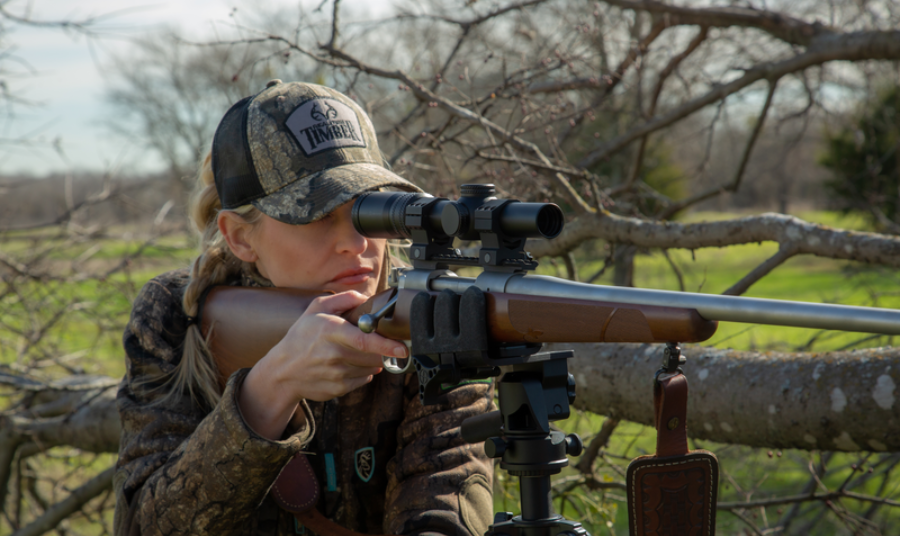
Is a Carbon Fiber Tripod Worth the Extra Money?
Carbon fiber tripods cost more than comparable aluminum models, but here's what the added money buys in weight savings, vibration control, cold-weather handling, and real-world hunting performance.
You're standing in the aisle, or more likely scrolling a product page, looking at two tripods that do the same job on paper but sit $200 apart. One is aluminum, one is carbon fiber, and the spec sheets look nearly identical. So what is that extra money actually buying?
The short answer is weight, vibration control, and durability, though how much any of those three matter depends entirely on the kind of hunting you do.
Carbon fiber is most worth the premium for hunters who carry a tripod long distances or shoot at extended range. If your tripod rarely leaves the truck or blind, a quality aluminum model may be the better value.
Why Carbon Fiber Tripods Cost So Much More Than Aluminum
Aluminum tripods are made from extruded metal tubing that gets cut, machined, and assembled through processes manufacturers have refined for decades, which keeps the cost of raw material and labor relatively low. Carbon fiber tripods start from woven carbon fabric that gets layered by hand or machine around a mold, saturated with resin, and cured under heat and pressure. Every one of those steps takes more time, more equipment, and more skilled labor than bending a tube of aluminum, and that difference in production complexity is where most of the price gap comes from.
It's also worth knowing that not all carbon fiber is built the same way, because the quality of the layup and the thickness of the tube walls both affect how the finished tripod performs. A cheaply made carbon fiber leg can flex more than a well-built aluminum one, so paying more for carbon fiber only pays off when the manufacturer got the layup right. This is part of why two carbon fiber tripods at different price points can feel like completely different products in the field, even though both are technically carbon fiber.
How Much Lighter Is Carbon Fiber, Really?
The numbers here are concrete enough to plan around. A full-size aluminum tripod built for rifle or spotting scope use typically runs somewhere in the 4 to 5 pound range, while a comparable carbon fiber model usually lands closer to 2.5 to 3 pounds. That's a reduction of roughly 30 to 40 percent, which sounds modest until you're carrying it for miles rather than setting it up in a driveway.
On a short evening hunt from a truck or a blind, that weight difference barely registers. On a multi-day backcountry hunt or a long stalk where you're already carrying a rifle, optics, water, and a pack loaded with gear, every pound taken off your load reduces fatigue and lets you move faster and quieter over rough terrain. Hunters who build their kit around minimizing pack weight tend to notice the difference in their legs and shoulders long before they notice it anywhere else.

Why Carbon Fiber Holds Steadier at Long Range
This is the advantage that gets talked about least, even though it's arguably the most important one for long-range shooters. Aluminum is a solid, uniform metal, and when a rifle fires, the recoil sends a wave of vibration through the tripod that resonates through the aluminum tubing and takes a noticeable moment to settle down. Carbon fiber's woven structure works differently: the fibers absorb and dissipate that vibration rather than letting it ring through the material, so the tripod settles back into a stable position much faster after the shot.
At close range that difference is barely noticeable, but stretch the distance out to 400, 600, or 800-plus yards and it starts to matter a great deal. A tripod that's still settling when you're trying to spot your impact or line up a follow-up shot costs you time and confidence. Carbon fiber's faster settling time means your reticle returns to target quicker, which matters most when conditions are windy, when you're shooting quickly, or when a follow-up shot needs to happen before an animal moves out of position.

Can Carbon Fiber Actually Take a Beating in the Field?
Two separate questions get lumped together under "durability," and they deserve separate answers.
Cold-Weather Handling
Aluminum conducts heat away from your hands extremely well, which is exactly the wrong property to want in freezing conditions. Grab an aluminum tripod leg bare-handed at 10 degrees and you'll understand the problem immediately. Carbon fiber doesn't conduct cold nearly as efficiently, so it stays more comfortable to handle through a cold morning sit and doesn't require gloves just to adjust your setup.
Impact Resistance and Long-Term Wear
The second question is impact resistance, and here the comparison is less one-sided. Aluminum tends to bend or dent under a hard impact, which is often repairable or at least doesn't render the tripod useless. Carbon fiber is stiffer and lighter, but a sharp enough impact or the wrong kind of torque can crack it rather than bend it, and a crack in carbon fiber usually means the leg needs to be replaced rather than straightened back into shape.
What "field tough" actually means for a tripod is less about surviving a single catastrophic hit and more about how well it holds up to the repeated wear of regular use: getting set up and broken down dozens of times, dragged through brush, strapped to a pack, and exposed to temperature swings across a season. A well-built carbon fiber tripod handles that kind of everyday wear just as well as aluminum, if not better, since it isn't prone to the dents and stuck joints that aluminum can develop over years of use.


Where It Wins
- Lighter for long carries
- Dissipates vibration faster
- More comfortable to handle in freezing weather
- Resists the dents that can contribute to stuck joints over time
Where It Still Makes Sense
- Lower manufacturing cost
- A hard impact may bend or dent rather than crack
- Strong value when pack weight is not important
- Plenty capable for shorter-range or stationary use
Do You Actually Need a Carbon Fiber Tripod?
Carbon Fiber Is Worth It If...
- You're a long-range precision shooter. Faster vibration settling translates into faster, more confident follow-up shots at distance.
- You're a backcountry hunter or serious stalker. When you're covering miles on foot with a full pack, the weight savings compound over the course of a hunt.
You Can Skip It If...
- You're a casual range shooter. Vibration dampening matters far less at 100 yards than it does at 600, and you likely aren't carrying the tripod far enough for the weight to matter.
- You're a truck hunter or hunt primarily from a blind. If your tripod's biggest journey is from the tailgate to the stand, the added weight savings won't do much for you.
- You're working with a tight budget. A quality aluminum tripod will serve most hunters well, and the money saved may be better spent elsewhere in your kit.
The honest take is that carbon fiber pays for itself differently depending on how you hunt. For some hunters it shows up in fewer aching shoulders after a long stalk. For others it shows up in a faster follow-up shot at distance. For a hunter who mostly sits in a blind a quarter mile from the truck, it may never show up at all.
The Bottom Line: Is a Carbon Fiber Tripod Worth It?
Carbon fiber costs more because it takes more to make, and it earns that cost back through lighter carries, faster-settling shots at range, and steadier performance in cold weather. Whether that's worth it to you comes down to how far you're walking and how far you're shooting.
If either of those distances is long, the upgrade is worth serious consideration. If neither is, a well-built aluminum tripod will do the job without asking you to spend the extra money.
Simple rule: the farther you carry your tripod and the farther you shoot from it, the easier it is to justify carbon fiber.
Carbon Fiber Tripod FAQ
Are carbon fiber tripods worth the extra money for hunting?
They can be, especially for long-range shooters and backcountry hunters. The main benefits are lower weight, faster vibration settling, and more comfortable handling in cold weather. Hunters who stay close to a vehicle or blind may get less value from the premium.
How much lighter is a carbon fiber tripod than aluminum?
In the full-size hunting tripod comparison discussed here, aluminum models typically fall around 4 to 5 pounds while comparable carbon fiber models are closer to 2.5 to 3 pounds, a reduction of roughly 30 to 40 percent.
Does carbon fiber reduce tripod vibration?
Carbon fiber's woven structure dissipates vibration instead of allowing it to resonate through the legs like aluminum can. That can help the tripod settle faster after a shot, which becomes more useful as shooting distance increases.
Is carbon fiber more durable than aluminum?
The comparison is not one-sided. Aluminum may bend or dent under a hard impact, while carbon fiber can crack under a sharp impact or improper torque. A well-built carbon fiber tripod can still handle repeated field use very well and avoids some of the denting and stuck-joint issues aluminum can develop over time.
Is carbon fiber better for hunting in cold weather?
Carbon fiber is generally more comfortable to handle in freezing conditions because it does not conduct heat away from your hands as efficiently as aluminum. Aluminum tripod legs can become extremely cold to the touch, while carbon fiber remains easier to handle during cold-weather adjustments.
Who should choose an aluminum tripod instead of carbon fiber?
Aluminum can be the better value for casual range shooters, truck hunters, blind hunters, and anyone working with a tighter budget. If you do not carry your tripod very far or regularly shoot at extended ranges, a quality aluminum tripod can provide the support you need without the added cost of carbon fiber.


